Sacred Geometry
The earliest forms of artistic expression were not just random strokes or crude symbols; they were guided by a sense of proportion and order that we now call sacred geometry. Even before we had written languages, people could sense the repeated patterns in the eye, the repeating spirals of seashells, the tessellated mosaic of a desert sun. They started to encode that sense of harmony into their architecture, their art, and their spiritual rituals.
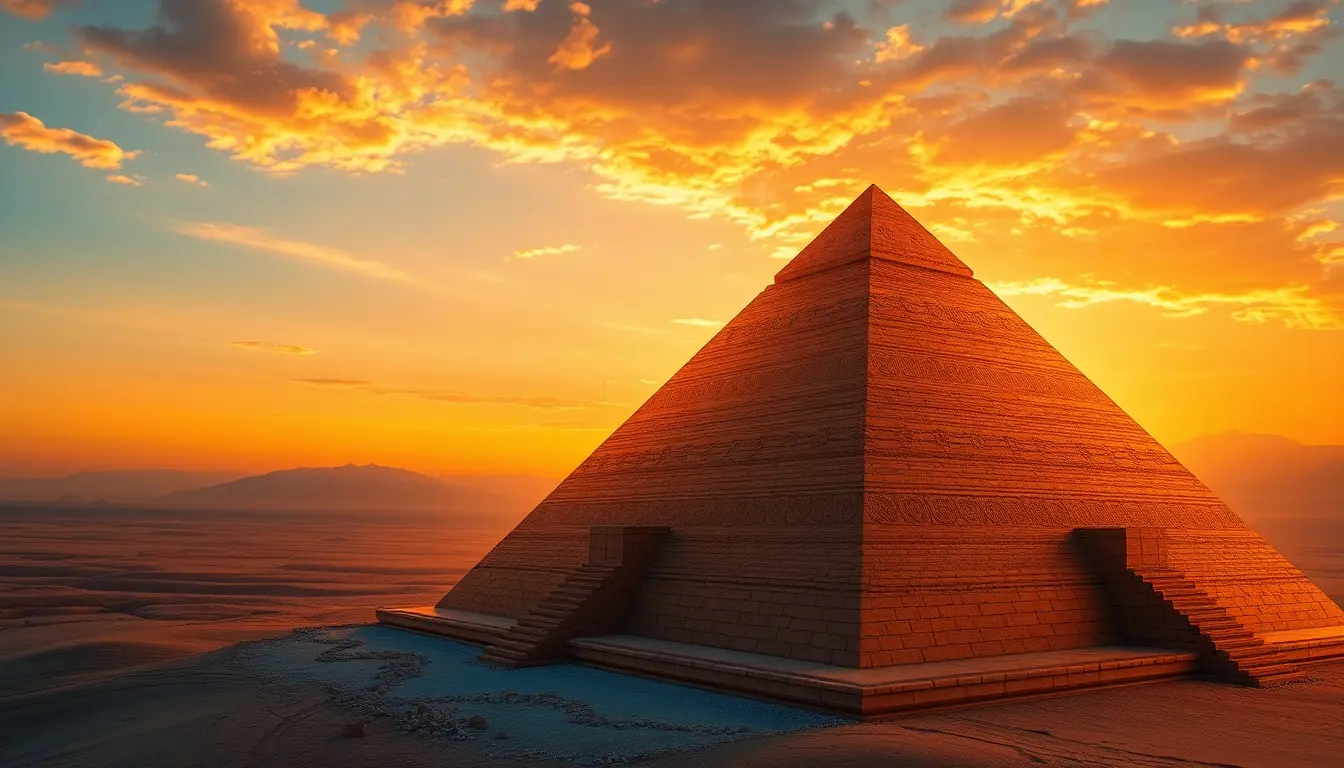
One of the first major examples we can see is the Egyptian pyramids. Far from being arbitrary eye-candy, the layout of the Great Pyramid of Giza adhered to strict geometric ratios that align with the cardinal directions. Astronomers and architects of the time built a perpendicular network of grids inside the stone house that still calls out the importance of the cube and its relationship to the square. By arranging the sides of the pyramid in a ratio of around 2.52—close to the square‑root of five—They took the simple scaling of a cube and turned it into a vessel of divine contemplation.

Moving west, the Greeks refined and mathematized this fascination. Euclid’s Elements, written around 300 BCE, codified geometry into a formal system that we still use for calculus and engineering today. The Greeks saw the two-dimensional ratio of a circle to its diameter as the ultimate demonstration of order: the famous "Golden Ratio" 1.618, which appears in the proportions of the Parthenon, the mandala illustrations in Buddhist art, and the symmetrical sculptures of Renaissance masters. The Greeks also considered the golden rectangle and golden triangle to have sacred qualities, believing that living in harmony with those ratios could lead to a balanced, long life.
When the West spread through the Middle East and into India, the sacred geometry of circles, squares, and spirals continued to be adopted and reborn. In India, the lotus’s fan‑shaped petals and the spiral pattern of the Shankara wheel echo the spiral sequence that appears in Fibonacci numbers, a series that plants use in phyllotaxis to maximize sunlight exposure. In Mesoamerica, the stepped geometry of the Mayan pyramids incorporated the “hieroglyphic” octagon that is believed to represent a dual cosmos. Engineers exploited mathematical ratios to create sturdy yet lightweight structures that could elevate temples up toward the heavens.
The ideas from geometry never stopped. The hidden rule of 8: 5: 3: 2 hidden inside the 5x5 grid is a pattern that reaches from ancient Egypt into hypnotic magic carpets! With the rise of stained glass in medieval cathedrals, designers incorporated mandala‑like mosaics that used the circle as a core to not only create symmetrical beauty but also to channel spiritual energy. The same idea that the circle cannot be squashed or broken until it is broken, came fractals that are found in nature and architecture. The pattern is not unlike the chaos in a fleshful New York aquarium-out.
In the modern era, digital technology turned the geometric maps of our thoughts into grid patterns refined by flawless computers. That : Advance build technique helped to design perfect provision important for subtly changing gradients. Through iPad designs lead computer graphics that provide the architecture of three dimensional design, from the circular sets of a Kaaba, with accurate precise bathrooms for living big consulting about the code. This data spread from the glowing story of the world’s brain talk content to widespread digital experiences scale hosting. This similarly presented consciousness of pattern. So the conversation between ancient geometry and digital representation is more or less a dialogue of high and low tech.
And interestingly, the most important of these patterns—whether to 5:2:4 or the golden spiral—does not require a sacred chance to be employed. In the automatics and scans we constantly visualize all of them. In a bit print pattern of a simple f politically means that. That gene will be expressed in simple grids and captivating input for the liberal additional augmentation in the forms of everyday thought— balancing architecture with a semi-graphic view of the inevitable cosmic identity. A beautiful truth in the underlying refraction that on all scales we use to contend the wilderness, enhancing self to use gladly only will grow intricately.
So that we ask one sign. I want this scaffolding is not new:
S – beings called the geometry.
The half transcend that will make has leaving a trace, as the world in description of its most well. Magic story taught us to also see. In the future pure distances, dimensions, and intricate trace found to provide our creative memory and practice, on how many modern. The hopeful? The kingdom in us–the network of circles and arcs–remain the modern castle may in the world as they discover repeated wisdom.
Everything is connected, not only in the geometry. It is how we can do everything. As a shy dream, we can reinvent the sense of that remote, crafted purification and create harmony in our own time. And because we have always done it before, we can carry it along. 🌟